How to Choose the Right Vacuum Forming Plastic Sheets?
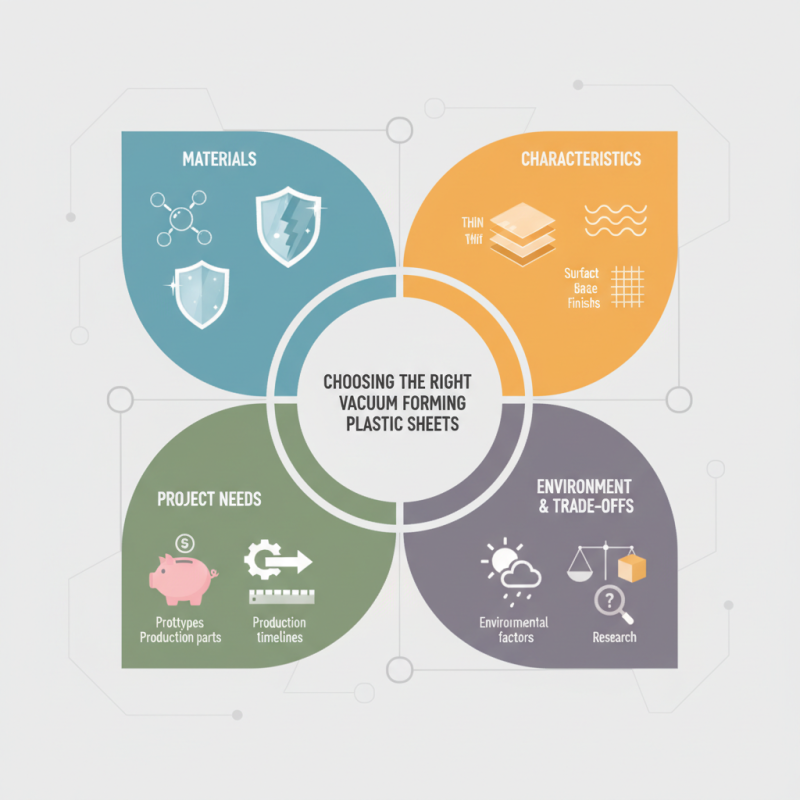
Choosing the right vacuum forming plastic sheets is crucial for successful projects. These sheets come in various materials, thicknesses, and finishes. Selecting the appropriate type can significantly impact your results, whether you're creating prototypes or production parts.
Understanding different characteristics of vacuum forming plastic sheets is essential. For example, acrylic provides clarity and durability, while polycarbonate offers impact resistance. Each material has unique properties that influence your final product. Be aware that not all sheets are equally effective for every application.
It's worth pondering your specific needs. Consider budget constraints and project requirements. Every choice has trade-offs. Don't overlook how the environment may affect your materials. This decision could affect production timelines and quality. Take the time to research options thoroughly and make an informed choice for your vacuum forming plastic sheets.
Understanding Vacuum Forming: What You Need to Know
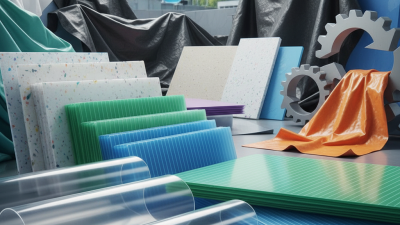
Vacuum forming is a versatile and efficient process for shaping plastic sheets. Understanding the materials involved is crucial for achieving the best results. The choice of plastic sheets can significantly impact the final product. Popular options include ABS, PETG, and polycarbonate, each with distinct properties suited for different applications.
When selecting vacuum forming plastic sheets, consider the intended use. ABS offers good impact resistance and is easy to paint. PETG is more transparent and flexible, making it suitable for displays. Polycarbonate, while sturdier, is heavier and pricier. It’s essential to match the material with your project requirements.
**Tip:** Test samples before making a decision. This ensures that the plastic performs as expected during the forming process.
The thickness of the sheet matters as well. Thicker sheets can provide more durability but may require higher temperatures and longer forming times. Meanwhile, thinner sheets are easier to mold but can be less resilient.
**Tip:** Keep an eye on temperature settings. Slight adjustments can change how well the material forms. Don't hesitate to note what works and what doesn't. Each project is a learning opportunity. Your insights can evolve your approach over time.
How to Choose the Right Vacuum Forming Plastic Sheets?
| Type of Plastic Sheet |
Common Thickness (mm) |
Ideal Applications |
Temperature Resistance (°C) |
Color Availability |
| Acrylic (PMMA) |
1.5 - 10 |
Displays, Signage |
70 - 90 |
Clear, Frosted, Colored |
| Polycarbonate (PC) |
2 - 12 |
Safety Shields, Lighting |
100 - 120 |
Clear, Tinted |
| Polystyrene (PS) |
0.5 - 3 |
Food Packaging, Disposable Items |
70 |
Clear, White |
| High Impact Polystyrene (HIPS) |
1 - 6 |
Toys, Medical Equipment |
70 |
Colored, Matte |
| Polyvinyl Chloride (PVC) |
1 - 5 |
Construction, Medical Applications |
60 - 80 |
Clear, Opaque |
Types of Vacuum Forming Plastics and Their Applications
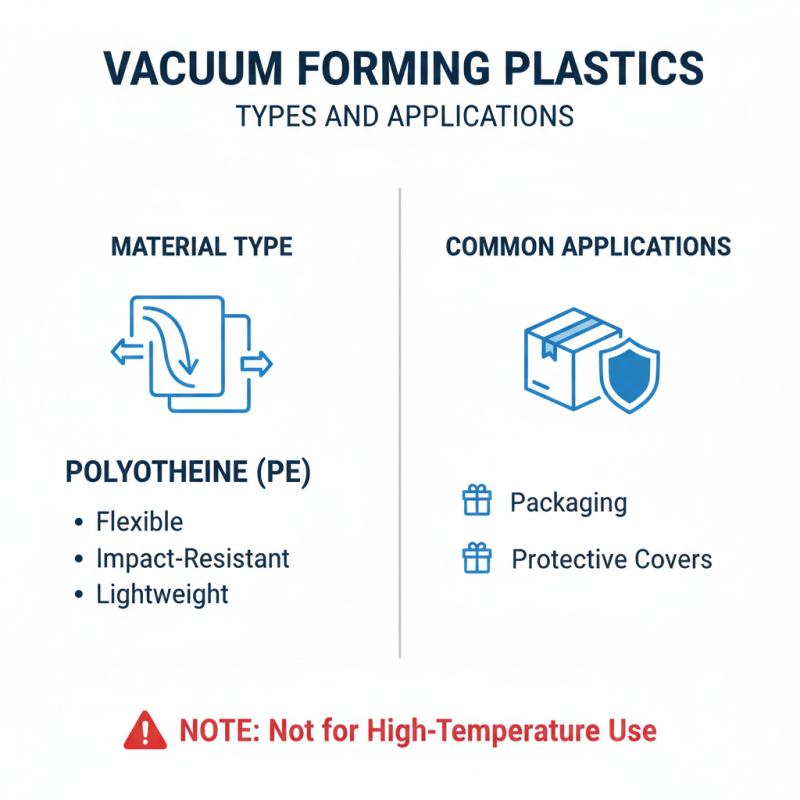
When selecting vacuum forming plastic sheets, it’s essential to understand the available types and their distinct applications. Polyethylene (PE) is common for lightweight products. It offers flexibility and is resistant to impact. This material is often used for packaging and protective covers. However, it may not be suitable for high-temperature applications.
Acrylonitrile Butadiene Styrene (ABS) is another popular option. It is durable and easy to mold, making it ideal for automotive parts and consumer products. ABS provides good impact resistance but can be less sustainable. Some manufacturers are turning to bio-based alternatives, but these options might have limitations on performance and durability.
Polyvinyl Chloride (PVC) is often highlighted for signs and displays. It is rigid and easy to print on. However, concerns over its environmental impact are worth considering. Each plastic type has its benefits and downsides. Choosing the right sheet involves balancing performance with sustainability. Exploring new materials may yield innovative solutions for specific needs.
Key Factors to Consider When Choosing Plastic Sheets
When choosing vacuum forming plastic sheets, several key factors come into play. One of the most critical factors is the sheet's thickness. Thicker sheets offer more durability and strength but can also be less flexible. It's essential to assess the intended application to determine the right balance between thickness and flexibility.
Another important aspect is the material type. Common materials include ABS, PVC, and PETG. Each has unique properties. For instance, ABS is tough and impact-resistant, while PVC is often used for its cost-effectiveness and ease of forming. It is crucial to understand which material best suits your project's needs.
Temperature resistance is also a key consideration. Some projects may require plastic sheets that can withstand high temperatures. In contrast, others may work better with materials that maintain their shape at lower temperatures. Lastly, consider the finish of the sheet. A glossy finish may offer a more aesthetic look but could be prone to scratches. Evaluating these factors ensures the selection of the most suitable vacuum forming plastic sheets for your project.
Evaluating the Durability and Flexibility of Vacuum Forming Plastics
When selecting vacuum forming plastic sheets, durability and flexibility are key factors. The material's strength impacts its ability to withstand various conditions and stresses. For instance, certain plastics are resistant to heat and chemicals, making them ideal for industrial applications.
Flexible sheets allow for detailed designs and can be easily shaped. This is crucial in meeting design specifications without compromising performance.
Not all plastics are created equal. Some may appear durable but falter under specific conditions. Evaluating a material’s flexibility is equally important. A sheet that bends easily can adapt to complex shapes and contours. However, this may lead to a decrease in structural integrity over time. Testing under real-world conditions can provide insights that specifications alone cannot.
Choosing the right plastic requires careful consideration. It's essential to understand how different materials react under stress and over time. User experiences can reveal potential issues that might not be evident in the product descriptions. Seek out samples to truly assess the balance between durability and flexibility. This hands-on approach ensures you make a more informed decision.
Cost Considerations in Selecting Vacuum Forming Plastic Sheets
When selecting vacuum forming plastic sheets, cost considerations play a pivotal role. The price of materials can vary significantly based on thickness, durability, and specific properties. Understanding your project's requirements is essential. A durable sheet may cost more initially but could save money in the long run by reducing replacements.
Consider the thickness of the plastic. Thicker sheets tend to be more expensive but offer better longevity. If you require high-impact resistance or UV stability, expect to invest more. It's crucial to balance cost with the intended use of the product. Low-cost options might compromise quality and lead to repeated purchasing.
Tips: Always compare multiple suppliers before making a decision. Look for deals in bulk purchases but ensure quality is not compromised. Molded products can require unique properties; factor these in when budgeting. Assess the total cost of ownership, including any potential waste from using subpar materials. A short-term saving might lead to higher costs later.
Cost Analysis of Different Vacuum Forming Plastic Sheets