Top Construction Equipment Trends in China for Global Buyers?
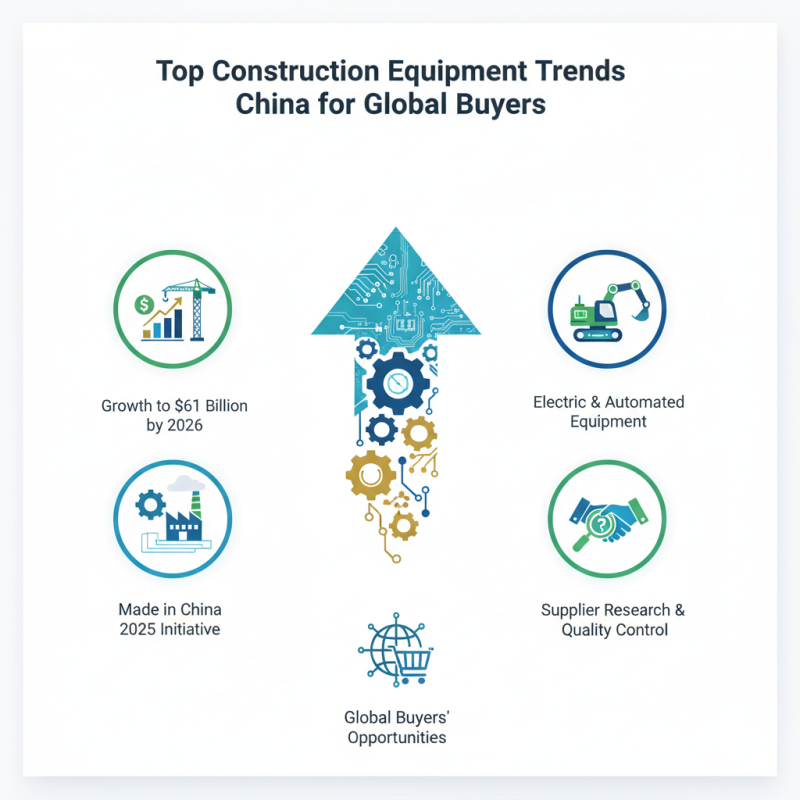
The Construction Equipment industry in China is rapidly evolving, driven by technological advancements and increasing demand. According to a recent market report by ResearchAndMarkets, the construction equipment market in China is projected to reach $61 billion by 2026, growing at a CAGR of 6.5%. This growth presents significant opportunities for global buyers looking to invest in high-quality machinery.
China's government initiatives, such as the "Made in China 2025" plan, further enhance the industry's development. These efforts aim to improve manufacturing capabilities and promote innovation in construction equipment. However, challenges exist. Issues like fluctuating raw material costs and inconsistent quality control can impact purchasing decisions. Buyers must conduct thorough research and consider local suppliers' reliability before making investments.
Understanding these trends is essential for global buyers. Staying informed about the latest technologies, such as electric and automated construction equipment, can lead to more strategic purchasing. Holistically viewing these factors will drive smarter investments in an ever-competitive market.
Emergence of Electric Construction Equipment in China's Market
The rise of electric construction equipment in China's market is reshaping industry standards. As more companies focus on sustainability, electric machines are gaining traction. These machines are quieter and produce fewer emissions, making them attractive options for urban projects. Electric technologies are relevant as cities evolve to meet stricter environmental regulations.
China's construction sector is vast and competitive. Electric machinery can be expensive, and many companies hesitate to invest. However, government incentives are encouraging adoption. Local authorities are pushing for cleaner solutions, propelling manufacturers to innovate. It's essential for buyers to weigh short-term costs against long-term benefits.
While electric equipment promises a greener future, challenges remain. Infrastructure for charging and battery longevity are common concerns. Buyers need to assess their needs thoroughly. Balancing performance and eco-friendliness is vital. The transition won't be easy, but electric construction equipment is here to stay.
Emergence of Electric Construction Equipment in China's Market
The chart above illustrates the growing market share of electric construction equipment in China from 2018 to 2023. The data indicates a significant increase in adoption, reflecting trends towards sustainability and innovation in the construction industry.
Advancements in Smart Technology for Construction Machinery
The construction industry in China is rapidly evolving with smart technology advancements. These innovations enhance efficiency and safety, making construction work more effective. Workers now use tools equipped with sensors, improving real-time monitoring on sites. These devices can predict potential issues by analyzing data, which is a significant leap in preventing accidents and ensuring smooth operations.
Drones play a vital role in construction projects. By surveying large areas quickly, they offer precise mapping and help identify potential hazards. However, the integration of drone technology requires proper training and adherence to regulations. There are still challenges to overcome in terms of data security and privacy issues. Not every project has embraced this technology fully, showing a need for more training and resources.
Artificial Intelligence (AI) is transforming equipment management. AI-powered systems analyze operational data, predicting maintenance needs and optimizing equipment usage. This reduces downtime and operational costs. Yet, dependence on AI raises concerns about skill redundancies among workers. The balance between human expertise and machine efficiency continues to be a topic for reflection in this dynamic field.
Sustainability and Eco-friendly Trends in China's Construction Sector
Sustainability is shaping the construction landscape in China. Recent reports highlight that 60% of companies prioritize eco-friendly practices. The demand for sustainable building materials has surged by approximately 30% in recent years. This trend reflects a broader commitment to reducing the industry's carbon footprint.
In 2022, around 40% of construction projects in China incorporated green technology. This includes prefabricated structures and energy-efficient machinery. Eco-friendly construction sites are becoming the norm, rather than the exception. Yet, challenges remain. Many companies still rely on traditional methods, which often hinder sustainability efforts.
The integration of circular economy principles is gaining traction. This model minimizes waste and promotes resource efficiency. However, only a small fraction of projects apply these principles effectively. Continuous improvement is necessary for widespread adoption. Data shows that the average construction waste in urban projects can reach up to 30%. Tackling this issue is essential for a greener future.
Adoption of Autonomous Vehicles in China's Construction Industry
The construction industry in China is undergoing a significant transformation with the adoption of autonomous vehicles. According to a report by the International Federation of Robotics (IFR), China alone is expected to see a 30% increase in the use of construction robots by 2025. Autonomous vehicles are a primary contributor to this rise. They enhance efficiency and reduce labor costs, but they also raise concerns about job displacement.
Construction sites are evolving. Autonomous vehicles handle tasks like material transport and site surveying. The overall goal is to improve safety and precision. However, the integration of this technology is not without challenges. Regulatory frameworks are still developing. There's a need for clearer guidelines to ensure safe operation in crowded job sites.
Despite the promise of autonomous technology, the shift is gradual. Companies are experimenting with pilot projects before fully committing. A McKinsey report indicates that only 10% of firms have implemented fully autonomous solutions. This gap highlights the cautious approach many firms take. The future of construction will likely be an interplay of traditional methods and innovative technologies.
Impacts of Government Policies on Construction Equipment Innovations
Government policies in China significantly shape the construction equipment sector. Recent initiatives promote innovation and sustainability. Regulations focus on reducing emissions and enhancing efficiency. These changes compel manufacturers to invest in greener technologies.
Incentives for electric equipment are gaining traction. Local governments support projects that use sustainable practices. This accelerates the shift towards eco-friendly construction methods. However, the rapid changes can overwhelm smaller companies struggling to adapt. They may face challenges with compliance and technology adoption.
Furthermore, international collaboration is encouraged. Policies are in place to attract foreign investment in the construction industry. This can lead to an exchange of ideas and technology. Yet, the complexity of navigating these policies can create uncertainty for global buyers. Keeping up with these evolving regulations is crucial for success.
