How to Source High Quality HDPE Material for Your Business?
Sourcing high-quality HDPE material is crucial for many businesses today. HDPE, or high-density polyethylene, is valued for its durability and versatility. It is widely used in packaging, construction, and other industries. However, finding reliable sources for HDPE can be challenging.
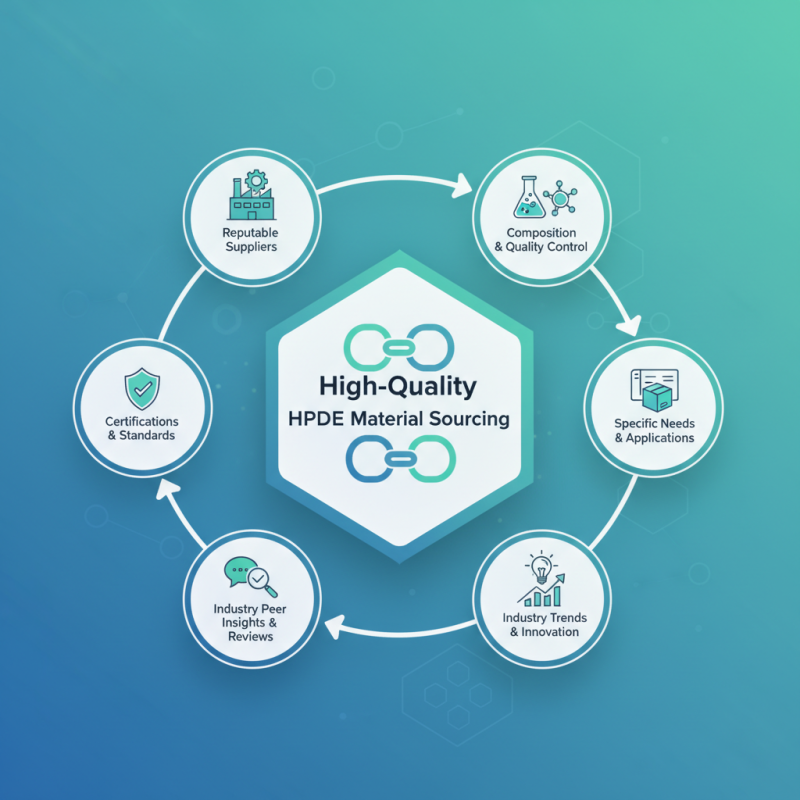
Many providers claim to offer quality materials, but not all meet industry standards. It’s essential to assess suppliers critically. Look for those with a solid reputation and certifications. Reviews and testimonials can be helpful but take them with caution. Sometimes, the best insights come from industry peers.
Quality control must be a priority. Inspect samples and check for chemical composition. Make sure the HDPE material is suitable for your specific needs. While it may take time and effort to find the right source, the investment can greatly enhance your product's quality and longevity. Consider following industry trends and innovations to stay ahead in sourcing methods.
Understanding HDPE Material and Its Applications
High-Density Polyethylene (HDPE) is a widely used plastic known for its strength and versatility. This material is resistant to impact and chemicals, making it ideal for numerous applications. It is commonly found in items like bottles, containers, and piping systems. Its durability ensures that products made from HDPE have a long lifespan, benefiting both manufacturers and consumers.
The applications of HDPE extend beyond consumer goods. Industries like construction and agriculture utilize HDPE in tanks, geomembranes, and storage solutions. Its lightweight nature contributes to lower shipping costs and easier handling. However, sourcing high-quality HDPE can be challenging. Not all suppliers provide the same grade or quality, leading to inconsistencies in production. Businesses often face the dilemma of balancing cost and quality. It requires thorough research and vetting of suppliers to ensure they meet industry standards.
Finding reliable sources for HDPE material demands a keen understanding of market dynamics. It involves monitoring supply chains and engaging with trusted suppliers. Operating without a solid network may lead to procurement issues or lower quality materials. Reflecting on past sourcing experiences helps improve future decisions. Yet, building those relationships takes time and effort, often testing one’s patience.
HDPE Material Applications Overview
This chart represents the distribution of high-density polyethylene (HDPE) applications across various industries, showcasing its versatility in different sectors such as packaging, construction, automotive, consumer goods, and medical fields.
Identifying Reliable Suppliers for HDPE Materials
Identifying reliable suppliers for high-quality HDPE materials can be a daunting task. Start by researching various suppliers through industry networks. Check their reputation and certification. Look for companies that have been in the market for several years. Experience often indicates reliability. Online reviews, customer testimonials, and industry references can provide valuable insights.
Visit potential suppliers' facilities if possible. This allows you to assess their production processes and quality controls firsthand. Pay attention to details, such as cleanliness and organization. Don't hesitate to ask about their sourcing methods. A good supplier should be transparent about where their HDPE materials come from. Their willingness to share this information can be a positive indicator.
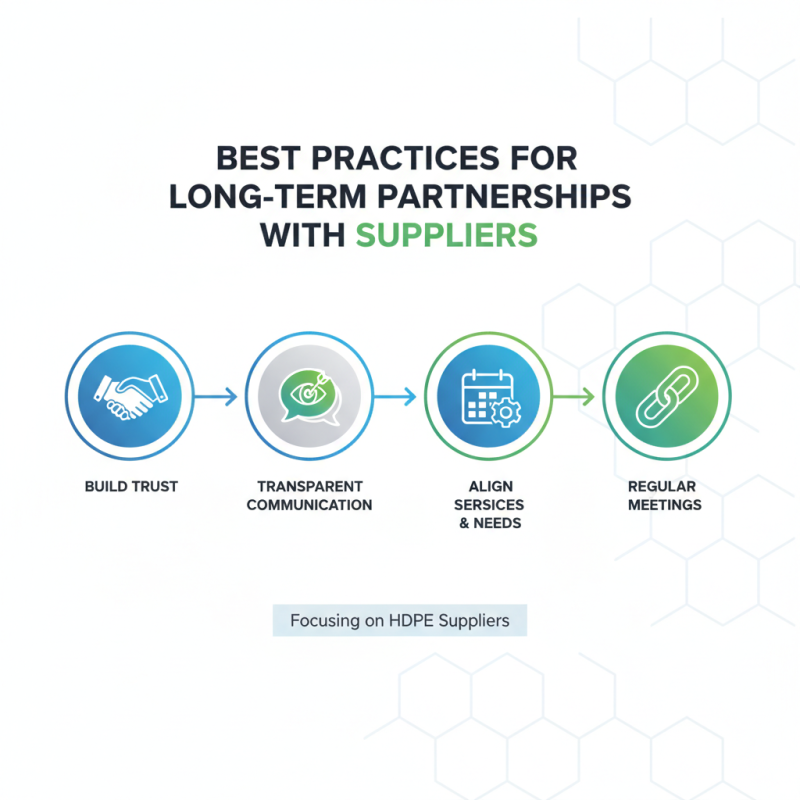
Evaluate the samples they provide. High-quality HDPE should have consistent texture and strength. If a sample fails to meet your standards, reconsider your choice. Trust your instincts. Building a strong relationship with a supplier takes time and effort. Be open to communication and feedback as you establish this partnership.
How to Source High Quality HDPE Material for Your Business? - Identifying Reliable Suppliers for HDPE Materials
| Supplier Type |
Location |
HDPE Material Grade |
Quality Certification |
Lead Time (Days) |
Min Order Quantity (kg) |
| Manufacturer |
USA |
HDPE100 |
ISO 9001 |
15 |
1000 |
| Distributor |
Germany |
HDPE80 |
CE |
10 |
500 |
| Importer |
China |
HDPE60 |
SGS |
25 |
750 |
| Supplier |
India |
HDPE50 |
FDA |
30 |
300 |
Assessing Quality Standards for HDPE Sourcing
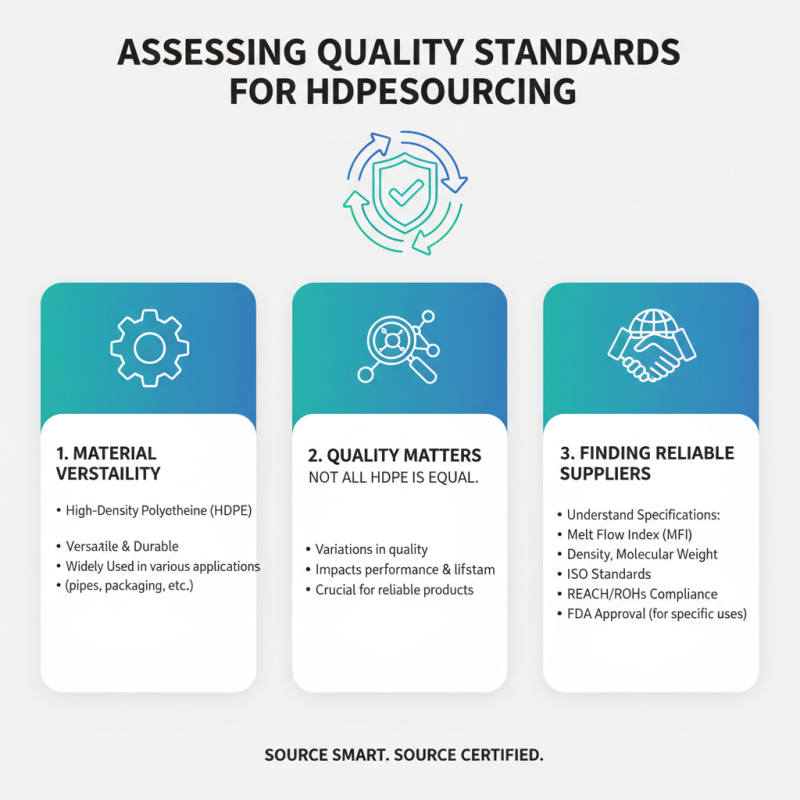
When sourcing HDPE material, assessing quality standards is crucial. High-density polyethylene (HDPE) is widely used due to its versatility and durability. However, not all HDPE is created equal. Understanding the specifications and certifications can help you find reliable suppliers.
Start by evaluating the material’s density and melt flow index (MFI). These characteristics indicate the material's performance. Samples should be tested in real-world conditions to ensure they meet your requirements. Certain grades may not perform as expected in specific applications, leading to product failures and increased costs.
Also, consider the supplier's reputation and experience. Look for those with a history of quality. Certifications like ISO help ensure consistent quality control. Yet, having a certificate doesn’t always mean top-notch products. Some suppliers might cut corners. Regular audits and testing can reveal hidden issues. This proactive approach is essential for long-term success in your sourcing strategy.
Evaluating Cost-Effectiveness in HDPE Procurement
When considering the procurement of high-density polyethylene (HDPE) material, evaluating cost-effectiveness is crucial. According to a recent industry report, the global HDPE market was valued at $66.74 billion in 2021 and is projected to grow at a CAGR of 5.2% by 2028. Keeping cost in check while ensuring quality poses a challenge for many businesses.
Tip: Regularly assess your suppliers' prices and quality metrics. Look for recent certifications or quality assurance processes they implement.
Suppliers often vary significantly in pricing. A smaller supplier may offer lower rates but could lack product consistency. In contrast, larger distributors may ensure quality but come with higher costs. A comprehensive cost-benefit analysis is essential. Evaluating the total cost of ownership, including shipping and storage, can help in making informed decisions.
Tip: Consider purchasing in bulk to negotiate better rates and reduce shipping costs.
It is also essential to monitor market trends. For instance, the demand for HDPE in sustainable applications is rising. Some reports indicate that recycling and eco-friendly practices can lead to long-term savings. However, sourcing from these environmentally conscious suppliers often has upfront costs. Balancing immediate expenses with long-term benefits requires careful thought and strategy. Evaluating different procurement strategies will help achieve a sustainable approach to HDPE acquisition.