Discover Exciting Plastic Manufacturing Jobs at Allied Plastics

What Is Steel Shelving and Why Is It Used?

Steel Shelving is a practical storage system made from formed or rolled steel components. It usually combines upright frames, horizontal beams, and adjustable shelves. Depending on its design, it may hold boxes, tools, spare parts, files, or retail stock. Its value is not simply strength. Steel resists daily knocks, supports organized access, and suits warehouses, workshops, offices, archives, and garages. A well-planned unit turns unused wall height into usable storage without demanding complex equipment.

In professional settings, selection begins with the actual load, not an attractive photograph. Users should check the rated capacity for each shelf, the total bay, shelf spacing, floor condition, and anchoring requirements. Manufacturer instructions matter because similar-looking products can perform very differently. Clean, dry steel may last for years, while moisture, chemicals, impact, and overloading can accelerate corrosion or distortion. Regular checks can reveal bent uprights, loose fasteners, damaged coatings, or shelves that sag visibly. Small warning signs should not be ignored.

Still, Steel Shelving is not a universal answer. It may be unsuitable where extreme humidity, strict hygiene controls, or unusually heavy loads demand specialized systems. That assumption is incomplete. The best choice balances capacity, access, budget, workplace safety, and future expansion. Experienced installers measure aisles and handling routes before assembly, then label shelves clearly after installation. Even a modest unit deserves careful review, because reliable storage depends on correct use as much as on strong material.

What Is Steel Shelving and Why Is It Used?

Definition and Core Structure of Steel Shelving

Steel shelving is a freestanding storage system made mainly from formed steel components. Its core structure usually includes upright posts, horizontal beams, shelf panels, braces, and adjustable connectors. The uprights carry vertical loads, while beams transfer weight across each shelf. Bracing limits sideways movement.

Load paths matter.

Shelf panels may use solid steel, wire mesh, or perforated sheets. Steel manufacturing also supports large-scale supply.

The World Steel Association reported approximately 1.89 billion tonnes of crude steel production worldwide in 2023, showing the material’s broad industrial availability. This supply supports consistent dimensions, replacement parts, and scalable storage construction.

In practical installation, workers should inspect floor level, frame alignment, fastener engagement, and rated capacity.

ANSI MH16.1-2023 provides design and safety guidance for industrial steel storage racks, although shelving systems still require application-specific review. A catalog rating is not universal. It can change with shelf spacing, load placement, impact, and anchoring conditions.

Steel shelving is used because it combines high strength with repeatable adjustment. A warehouse may hold cartons on solid panels, while a workshop may use mesh shelves for airflow and visibility.

EPA’s Sustainable Materials Management data also reports a 70.9% recycling rate for steel containers and packaging in 2018, supporting steel’s circular-material advantage, though shelving itself is not packaging.

The overlooked weakness is poor planning. Even strong steel can become unstable when heavy items sit near the front edge.

Main Types of Steel Shelving Systems

Steel shelving is a storage system made from formed or rolled steel components. It supports cartons, tools, spare parts, files, and small containers. Compared with wood, steel usually resists moisture, abrasion, and daily impacts more effectively. In workshops, warehouses, offices, and archives, its adjustable levels help staff use vertical space. A practical installation also needs a level floor, clear aisles, and evenly distributed loads.

Clip-in shelving is a common choice for light and medium-duty storage. Its panels and uprights connect without many tools, so layouts can change quickly. Boltless rivet shelving offers similar flexibility, but its connections may feel more permanent. Longspan shelving uses deeper shelves and stronger beams for bulky cartons, machine parts, or several containers. It works well where hand access remains important. Closed steel cabinets provide enclosed shelving, protecting documents and sensitive materials from dust. Mobile shelving moves along tracks and can create more capacity in compact rooms, although it costs more and requires careful floor preparation.

The best system depends on load weight, item size, access frequency, and environmental conditions. Wire or perforated shelves improve airflow, while solid panels hold small loose parts more reliably. Adjustable levels reduce wasted space. Do not judge capacity by appearance alone. Check the rated load for each shelf and follow the manufacturer’s installation guidance. I have seen attractive layouts fail because heavy boxes were placed on weak upper levels. Even careful planning can miss future growth, so leaving modest expansion space is often wiser than filling every bay.
How Steel Shelving Supports Storage and Organization

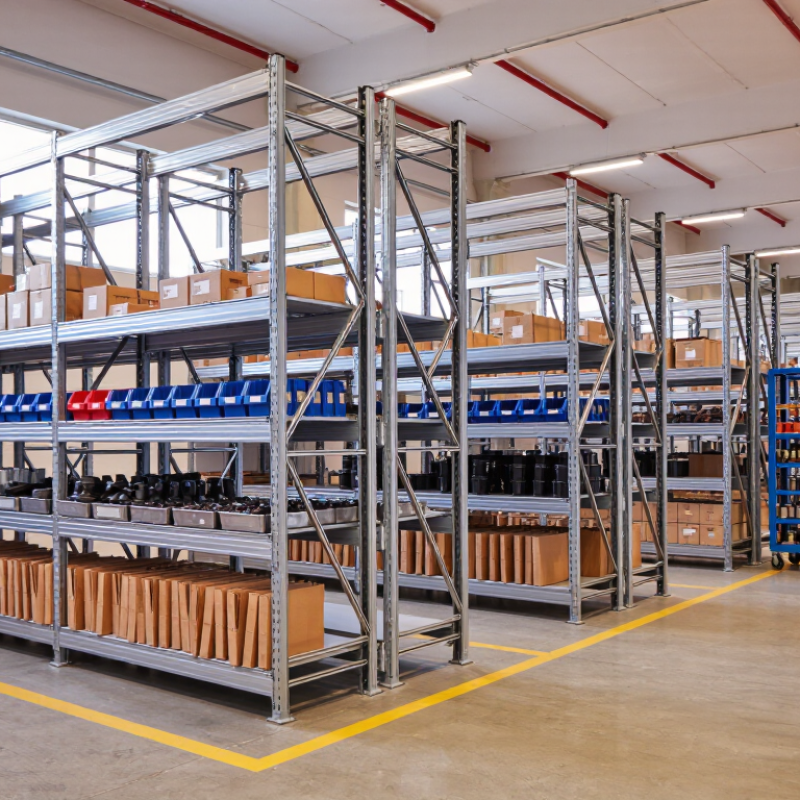
Steel shelving is made from formed steel panels, uprights, and supporting beams. It creates a stable structure for boxes, tools, records, and spare parts. In a storeroom, strong shelves reduce floor clutter and make vertical space useful. The open design also keeps stored items visible from the aisle. That visibility matters. Staff can identify low stock without opening every container.

In practice, shelf depth should match the items being stored. Deep shelves may waste space and hide smaller supplies. Adjustable levels allow workers to position shelves around cartons, bins, or equipment. This flexibility supports changing inventory needs. However, steel shelving is not automatically safe. Poorly distributed loads can bend components or make the unit unstable. I have seen this mistake in small storage rooms. Heavy boxes were placed high, while lighter cartons filled the lower levels.

Reliable organization starts with accurate measurements and clear labels. Leave enough aisle space for comfortable movement and safe handling. Place frequently used items between waist and shoulder height. Store heavier materials on lower shelves. Check bolts, panels, and floor contact points during routine inspections. A little maintenance prevents bigger problems. Steel may resist daily wear, but it still needs sensible loading and occasional review. Shelving plans should be adjusted when work patterns change, not only when space runs out.

Common Applications Across Workplaces and Facilities

What Is Steel Shelving and Why Is It Used?

Steel shelving is a modular storage system made from formed steel panels, beams, and supports. It is common in warehouses, workshops, archives, retail backrooms, laboratories, and maintenance rooms. Unlike temporary storage furniture, properly specified steel shelving supports repeated loading, frequent handling, and changing inventory.

Warehouse aisles reveal its practical value. A technician can place labeled bins at eye level, while heavier containers stay near the floor. This arrangement reduces unnecessary lifting and keeps walkways clearer. The U.S. Occupational Safety and Health Administration identifies material handling as a major source of workplace injuries, with roughly one in four industrial accidents linked to it. Shelving cannot remove every risk, but sensible height, load limits, and aisle spacing can reduce awkward movement.

Steel shelving also fits the growing pressure on facilities to use space efficiently. The U.S. Energy Information Administration reports that commercial buildings account for about 18% of U.S. energy consumption, making organized storage relevant to usable floor area and operational efficiency. In practice, open shelves can improve visibility and reduce time spent searching for parts. However, open storage is not automatically better. Dust, moisture, vibration, and poor labeling still create problems. The 2023 Warehousing Education and Research Council benchmarking report emphasizes inventory accuracy and process discipline, reminding managers that shelving supports a system; it does not replace one. Load testing, inspections, and clear identification remain necessary.

Key Factors in Selecting Steel Shelving

What Is Steel Shelving and Why Is It Used?

Steel shelving uses formed steel panels, uprights, and braces to create durable storage levels. It suits warehouses, workshops, archives, and retail backrooms because it supports repeated loading and daily handling. Open designs improve visibility, while adjustable levels accommodate cartons, tools, and spare parts. Simple, but not careless.

Key Factors in Selecting Steel Shelving

Selection should begin with the actual load, not an estimated average. Check the manufacturer’s rating for evenly distributed weight, shelf span, and configuration. MHI’s 2024 Annual Industry Report identified labor shortages as a challenge for 55% of supply-chain respondents. Adjustable shelving can reduce reaching and searching, but poor layout still wastes labor. Measure item dimensions, access paths, ceiling height, and future inventory growth.

Environmental conditions matter. Galvanized or coated steel is preferable in humid areas, while dry archives may need only standard finishes. Inspect edges, welds, fasteners, and uprights for damage. OSHA requires stored materials to remain secure against sliding or collapse under 29 CFR 1910.176(b). Anchoring may therefore be necessary, especially in seismic or high-traffic areas.

Do not treat a published capacity as permanent; damaged components, uneven floors, and overloaded shelves change performance. The overlooked detail is often clearance. A shelf that fits on paper may obstruct sprinklers, doors, or safe handling routes.