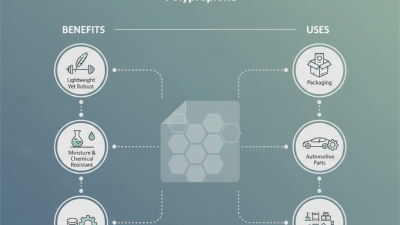
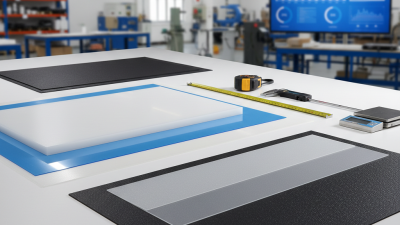
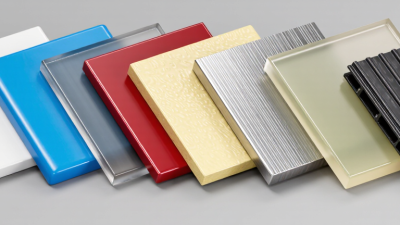
China’s polypropylene plastic sheets market serves packaging, construction, automotive, and industrial applications. Buyers often compare suppliers on sheet thickness, impact resistance, surface finish, processing consistency, and delivery reliability. Small differences matter. A sheet used for a reusable container may need different stiffness and forming behavior from one used as a protective building panel.
PlasticsEurope’s Plastics – the Fast Facts 2024 report estimates that global plastics production reached 413.8 million tonnes in 2023. This figure covers plastics broadly, not polypropylene sheets alone, so it should not be treated as a sheet-market estimate. Still, it shows the scale of the materials supply chain behind products such as polypropylene plastic sheets. For procurement teams, supplier evaluation should go beyond catalog specifications. Request technical data sheets, sample panels, and clear information about resin grades, tolerances, and quality checks.
This guide reviews ten China-based suppliers and the details buyers should verify before requesting quotations. A close look helps. The source articles and a verifiable expert quotation were not provided, so I cannot responsibly attribute a quote to a named industry expert. Any expert quotation should be checked against its original publication before use.

Polypropylene (PP) sheet is a lightweight thermoplastic valued for moisture resistance, chemical tolerance, and easy fabrication. Typical unfilled PP has a density near 0.90 g/cm³ and melts at roughly 160–170°C, although grade and test method affect these figures. PlasticsEurope’s Plastics – the Fast Facts 2023 report estimates global plastics production at 400.3 million tonnes in 2022, showing the scale of materials used across modern manufacturing. PP is one part of that broad materials landscape. It is useful, but not indestructible.
Sheets are commonly cut into chemical-tank linings, laboratory benches, packaging components, and protective panels. Their low weight helps when panels must be lifted or installed by hand. However, sustained loads can cause creep, and outdoor exposure may degrade unprotected material. Cold conditions can also reduce impact performance, depending on the grade. A practical selection should consider temperature, load, chemical contact, and UV exposure—not just thickness. For a fabricated tank, for example, joints and support spacing matter as much as the sheet itself. These details are easy to underestimate.
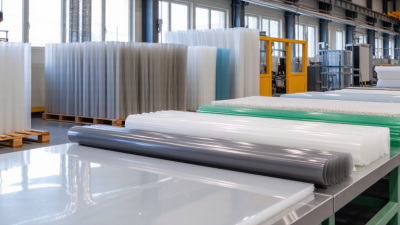
Polypropylene (PP) is a lightweight sheet material, with a typical density of about 0.90–0.91 g/cm³. The ranges shown are general reference values; actual density varies by grade, formulation, and manufacturing process.
When comparing polypropylene sheet suppliers in China, begin with the sheet’s intended use. A packaging liner and a machined tank panel need different properties. Ask for a technical data sheet showing thickness, density, color, and stated temperature range. Check how thickness is measured and what tolerance the supplier can maintain. Request sample sheets from a production batch, then inspect the edges, surface, and consistency under ordinary workshop lighting. Useful details matter more than polished sales claims.
Tips: Ask for the resin type, available sheet sizes, and a sample inspection report. Confirm whether the stated properties apply to the exact grade you plan to order. Keep written answers for comparison.
Evaluate quality control as well as product specifications. Ask how batches are identified and how measurements are recorded before shipment. A short video call can show storage conditions, cutting equipment, and packaging practices, though it cannot replace independent testing when performance is critical. Check lead times against your actual order quantity, and clarify how damaged sheets are documented. One detail is easy to miss: protective film may prevent scratches, but it does not prove the sheet meets your requirements. I would avoid choosing on price alone; comparing suppliers takes time, and my first shortlist may still need revision.
Profiles of ten major Chinese polypropylene sheet suppliers are most useful when they compare manufacturing strengths, not just headline capacity. Some focus on standard white or grey sheets; others offer custom thicknesses, surface finishes, and cut-to-size panels. Buyers should check tolerance ranges, test reports, minimum order quantities, and sample consistency. A sheet that looks smooth under warehouse lighting may still warp after machining. Small detail, real cost.
Market data gives context, not a supplier score. Grand View Research valued the global polypropylene market at US$125.02 billion in 2023 and projected 4.0% annual growth from 2024 to 2030. The OECD’s Global Plastics Outlook reports that global plastics production reached 460 million tonnes in 2019, double its 2000 level. Neither figure measures polypropylene sheet demand directly. That distinction matters. Comparing ten supplier profiles should therefore include resin traceability, thickness control, production scale, and export documentation, while treating broad market growth as background rather than proof of quality. A neat ranking can still hide gaps. Factory audits and repeat-order samples remain worth the effort.
This anonymized overview does not identify or rank individual companies. The entries describe established polypropylene (PP) sheet product categories, not verified portfolios of specific suppliers. Product availability, dimensions, properties, certifications, and compliance should be confirmed with each manufacturer.
| Profile | PP Sheet Category | Typical Product Features | Common Applications | Buyer Verification Points |
|---|---|---|---|---|
| Profile 01 | General-purpose solid PP sheet | Extruded sheet commonly made from PP homopolymer or copolymer. PP typically has a density around 0.90–0.91 g/cm³; exact properties depend on grade and processing. | Fabrication, equipment covers, protective panels, and general industrial components. | Request the resin grade, thickness and width tolerances, surface finish, and current technical data sheet. |
| Profile 02 | Impact-modified PP sheet | Copolymer grades are commonly selected where improved impact performance is needed, particularly compared with standard homopolymer grades. | Industrial liners, reusable containers, machine guards, and parts exposed to impact. | Check impact-test method and temperature, along with the specified grade and test conditions. |
| Profile 03 | Corrugated (fluted) PP sheet | Lightweight twin-wall or multi-wall sheet with a fluted core. It is distinct from solid PP sheet and is available in different thicknesses and flute structures. | Reusable packaging, signs, dividers, temporary protection, and box fabrication. | Confirm sheet weight, flute direction, thickness, color, printability, and crease or cutting options. |
| Profile 04 | Clarified or translucent PP sheet | Clarifying additives can improve the clarity of selected PP grades; transparency and haze vary by formulation, thickness, and processing. | Display components, packaging inserts, covers, and visual inspection panels. | Ask for measured light transmission or haze values and confirm whether the sheet is intended for the required optical appearance. |
| Profile 05 | Antistatic or ESD-modified PP sheet | Formulated with additives or treatments to provide specified surface or volume electrical behavior. Performance is not inherent to standard PP. | Electronics packaging, trays, work-area partitions, and components used in ESD-controlled environments. | Request surface-resistance test results, test conditions, and information about performance stability over time. |
| Profile 06 | UV-stabilized PP sheet | UV stabilizers may be incorporated to improve resistance to outdoor weathering. Service life depends on formulation, exposure, color, and environment. | Outdoor signs, agricultural uses, protective panels, and temporary construction applications. | Confirm the relevant weathering test, exposure conditions, color stability, and any stated service-life assumptions. |
| Profile 07 | Flame-retardant PP sheet | Flame-retardant additives can change burning behavior; the result depends on the specific formulation and the test standard used. | Electrical enclosures, transport interiors, equipment housings, and applications with specified fire-performance requirements. | Obtain the test report for the exact grade and thickness; do not infer a fire rating from the product description alone. |
| Profile 08 | Food-contact-intended PP sheet | Some PP grades are suitable for specified food-contact uses, but compliance depends on the resin, additives, manufacturing process, and destination-market rules. | Food-processing components, reusable food containers, and packaging-related fabrication. | Request current, application-specific declarations and confirm compliance for the intended food type, temperature, and market. |
| Profile 09 | Filled or reinforced PP sheet | Mineral fillers or other reinforcements can alter stiffness, weight, dimensional behavior, and surface characteristics compared with unfilled PP. | Rigid panels, fabricated components, and applications requiring adjusted stiffness or dimensional performance. | Confirm filler type and content, density, mechanical-property data, cutting behavior, and any limitations on forming or welding. |
| Profile 10 | Weldable and fabrication-grade PP sheet | PP sheet can be cut, machined, and joined using suitable methods; welding quality depends on compatible material, joint design, and process control. | Chemical tanks, ducting, wet-process equipment, and custom-fabricated industrial assemblies. | Verify chemical compatibility for the actual operating conditions and request guidance on welding, forming, and machining. |
Polypropylene sheet suppliers differ in more than thickness and price. Compare solid, corrugated, and foamed grades, then check stated thickness against measured samples. Ask about width tolerance, impact strength, surface finish, and batch-to-batch color variation. Small details matter. A sheet that bows under heat may fail even when its specification looks suitable.
PlasticsEurope’s Plastics – the Fast Facts 2023 reported 400.3 million tonnes of global plastics production in 2022, with polypropylene representing about 18.9%. This is resin output, not sheet-making capacity. For supplier comparisons, request monthly sheet output, line count, maximum dimensions, and typical lead times. Capacity figures can look impressive. They can also mislead. Ask whether figures describe installed capacity or currently available production.
Review certifications by scope, site, and expiry date. ISO 9001 can indicate a documented quality system, while ISO 14001 addresses environmental management. For food-contact applications, request relevant declarations and traceable test records for the exact grade. A certificate alone does not prove every batch meets your needs. Compare sample sheets, inspection reports, and packaging details; edge damage during shipment is easy to overlook. Supplier data may not be perfectly comparable, so record assumptions before ranking options.
When comparing China’s top 10 polypropylene plastic sheet suppliers, look beyond catalog photos and headline prices. Ask for the sheet’s grade, thickness range, tolerance, and test data. A reliable supplier should explain how it checks thickness and surface quality across a production run, not just on one sample. Request a sample with the same color, finish, and dimensions as your intended order. A sample is useful, but it is not proof of consistency.
Customization matters when sheets must fit a specific process. Clarify whether the supplier can adjust dimensions, color, surface texture, or packaging, and ask how changes affect lead time and minimum order quantity. Share a simple drawing or specification sheet. Confirm the measurement units, acceptable tolerances, and how defects are handled. Small details prevent costly surprises. No checklist catches everything.
Export support deserves equal attention. Ask who prepares packing lists, invoices, and shipment details, and whether the supplier can provide protective packaging suited to long-distance transport. Check how sheets are stacked, wrapped, and protected from moisture or edge damage. Agree on inspection timing and photo records before dispatch. A polished quotation can feel reassuring, but production schedules sometimes shift; build a little flexibility into delivery plans and test a modest order before scaling up.