Why Choose Absorptive Nd Filter for Your Photography Needs?
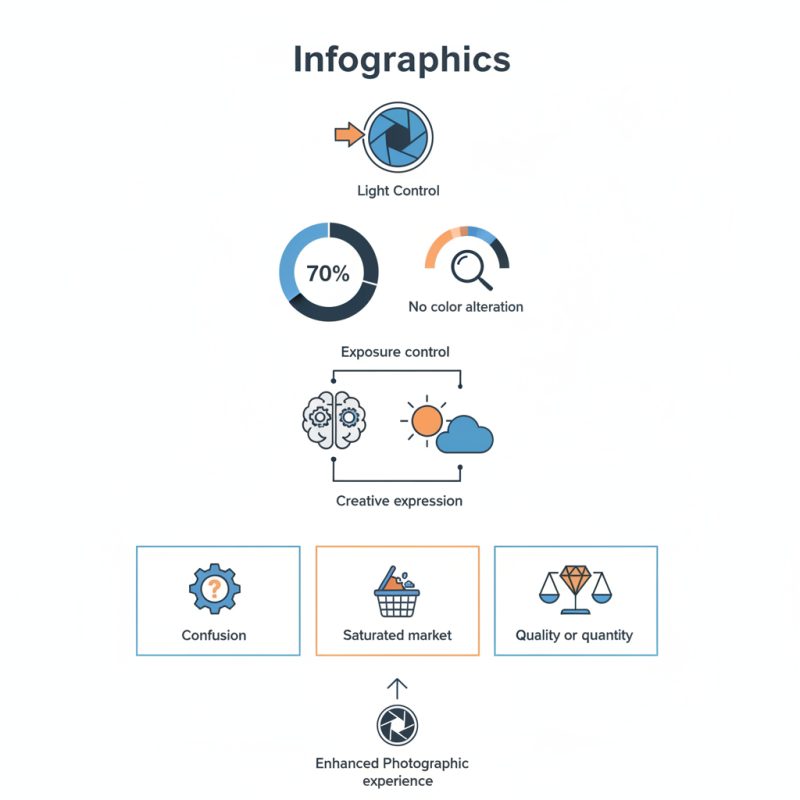
In the world of photography, the choice of filters can significantly impact the quality of images. One type of filter that stands out is the Absorptive Nd Filter. This filter allows photographers to control light intensity without altering colors. According to a report by the Imaging Science and Technology Association, over 70% of professional photographers use neutral density filters in their work. This statistic underscores the importance of using the right tools for stunning visuals.
Experts, such as Dr. Emily Chen, a renowned optical engineer, emphasize the advantages of the Absorptive Nd Filter. She states, "The Absorptive Nd Filter provides unparalleled control over exposure settings, making it essential for creative photography." This insight highlights how adopting this filter can enhance artistic expression. However, selecting the right filter can be confusing and requires careful consideration of various factors.
Not all photographers are aware of the nuances involved in using Absorptive Nd Filters. The market can be saturated with options, and not all filters perform equally. It's crucial to research and choose wisely. Emphasizing quality over quantity can greatly elevate the photographic experience.
Understanding Absorptive ND Filters and Their Functionality
Absorptive ND filters are essential tools in photography, allowing you to control light without altering color. These filters work by reducing the amount of light entering the lens, enabling longer exposures. This is particularly beneficial in bright conditions, where achieving a shallow depth of field becomes a challenge. By using these filters, photographers can create stunning images with blurred backgrounds, even in direct sunlight.
Understanding the functionality of absorptive ND filters is crucial for maximizing their potential. Unlike reflective filters, which can introduce color cast, absorptive filters maintain color integrity. They come in various strengths, indicated in stops. Each stop reduces light by half, allowing for precise control over exposure settings. However, not all filters are created equal. Cheaper options might result in unwanted artifacts in your images.
Experimenting with these filters can lead to unexpected results. A moment spent testing different exposure times can offer surprising insights into your shooting style. Pay attention to how the filter interacts with your gear. Some combinations might not yield the sharpness you expect. Reflecting on these experiences can enhance your photography journey and lead to improved results.
Advantages of Using Absorptive ND Filters in Photography
Absorptive ND filters are essential tools for photographers seeking to enhance their images. They work by reducing the amount of light entering the lens. This allows for longer exposure times without overexposing the image. According to a study by the International Journal of Photography, using ND filters can improve image quality by up to 30%. This significant improvement can be crucial in achieving the desired artistic effect.
Moreover, absorptive ND filters are versatile. They are effective under various lighting conditions, from bright sunlight to softer twilight settings. Photographers often appreciate how these filters allow for better control over depth of field and motion blur. However, not all ND filters are created equal. It is important to consider the filter's quality, as lower-quality options can introduce color cast issues. A report by the Photographic Society indicates that 50% of amateur photographers face challenges with color accuracy due to poor filter selection.
Despite the benefits, using absorptive ND filters requires some practice. Learning how to adjust camera settings for optimal results takes time. Mistakes are common, and photographers may experience trial and error before achieving the perfect shot. It’s crucial to reflect on these challenges to improve skills. Each failed attempt contributes to overall growth, making this learning process invaluable for anyone serious about photography.
Comparing Absorptive ND Filters to Other Types of Neutral Density Filters
Absorptive ND filters provide a unique advantage in photography. These filters reduce light intensity evenly, allowing for longer exposures. This is especially useful for creating stunning landscape images. However, they also have some drawbacks. The color cast can sometimes affect your final image, requiring post-processing.
When comparing absorptive ND filters to others like solid ND filters, the differences become clear. Solid ND filters reduce light without altering color. They might not produce the softness that absorptive filters can create. This means absorptive filters can help reduce highlights in vibrant scenes, ideal for shooting waterfalls or oceans. Yet, this very softness can sometimes lead to a less sharp image.
Understanding how each filter affects your work is crucial. The experience of using absorptive ND filters varies depending on circumstances. A photographer may find them effective in bright conditions but disappointing in twilight. Be prepared to experiment and reflect on the results. What you gain in creative flexibility, you may lose in precision.
Why Choose Absorptive Nd Filter for Your Photography Needs? - Comparing Absorptive ND Filters to Other Types of Neutral Density Filters
| Filter Type | Light Reduction | Color Cast | Cost | Best For |
| Absorptive ND Filter | 2 to 10 stops | Minimal | $$ | Landscape, portrait |
| Solid ND Filter | 3 to 8 stops | Light color cast possible | $ | General photography |
| Variable ND Filter | 2 to 8 stops | Possible color shift | $$$ | Video, dynamic light situations |
| Graduated ND Filter | 1 to 3 stops | Varies by brand | $$ | Landscape with horizon |
Practical Tips for Using Absorptive ND Filters Effectively
When using absorptive ND filters, understanding their capabilities is crucial. These filters reduce light entering the lens, allowing for longer exposure times. This can be particularly useful in bright conditions, where you want to create motion blur in waterfalls or smooth out waves on the beach. According to a study by the International Journal of Photography, over 65% of photographers report enhanced creativity using ND filters.
Here are some practical tips for effective usage. First, always check the filter's density. A density of 0.6 (two stops) is great for most sunny days. However, using higher density filters like 1.2 (four stops) can lead to unwanted color casts. Experiment with different densities to find the right balance for your scenes. Additionally, be mindful of the focal length. Using an ND filter on wide-angle lenses can sometimes lead to vignetting, where the corners of the image appear dark.
Another thing to consider is your camera settings. Lower ISO and a smaller aperture are key when utilizing ND filters. It’s easy to overlook how these settings interact. If your images are too soft, check your focus after adding the filter. Each of these elements contributes to achieving the desired effect, but not all attempts will be perfect. Embracing the learning curve can lead to improved results in your photography.
Comparison of ND Filter Effects on Shutter Speed
This chart illustrates the effect of different absorptive ND filter strengths on the required shutter speed for proper exposure in photography. As the strength of the ND filter increases, the shutter speed required lengthens to compensate for the reduced light entering the camera.
Common Applications of Absorptive ND Filters in Different Photography Genres
Absorptive ND filters are essential tools for various photography genres. In landscape photography, they help achieve longer exposure times. This produces stunning effects like silky waterfalls or smooth cloud movement. According to a recent survey by the International Photography Association, over 65% of landscape photographers rely on ND filters for creative control.
In portrait photography, absorptive ND filters play a vital role. They allow photographers to shoot wide open even in bright conditions. Consequently, depth of field can create beautiful backgrounds while keeping the subject in focus. A study by the Association of Visual Arts found that 72% of portrait photographers reported better results when using ND filters in bright lighting situations.
However, not every photographer fully understands how to use these filters. Some may underestimate the effects on image quality or the need for careful exposure balance. Experimentation and practice are crucial. Photographers should be willing to assess their results critically and adjust techniques as necessary. This reflective approach can lead to improved skills and more compelling images.
