Global buyers are reassessing heavy plastic sheeting as construction, agriculture, logistics, and environmental projects face tougher performance demands. The choice is no longer based on thickness alone. It depends on polymer type, tear resistance, UV stability, temperature range, weldability, and verified testing.
The OECD’s Global Plastics Outlook reported 353 million tonnes of plastic waste in 2019. UNEP’s Turning off the Tap report also links better product design with reduced environmental pressure. These findings matter for buyers selecting HDPE, LDPE, PVC, reinforced polyethylene, or geomembrane sheeting. A heavier sheet is not automatically a safer sheet. That assumption needs testing.
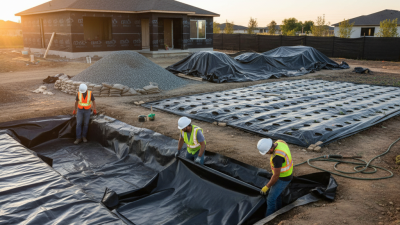
Robert M. Koerner, Ph.D., founder of the Geosynthetic Research Institute, has emphasized, “The best geosynthetic is one that is properly selected, designed, installed, and maintained.” His principle applies directly to heavy plastic sheeting procurement. A 20-mil polyethylene cover may suit temporary storage, while a textured HDPE geomembrane may better support containment or demanding outdoor use. ASTM and ISO test methods can help compare tensile strength, elongation, puncture resistance, and seam performance. However, test results do not always predict field performance perfectly. Installation quality, folding, wind exposure, and warehouse storage can change the outcome.
This 2026 guide examines the best heavy plastic sheeting types for global buyers. It connects material science with practical purchasing decisions. Readers will find clearer comparisons, realistic limitations, and details often missed in supplier catalogs. Small details matter. A sharp pallet edge can defeat an impressive specification.
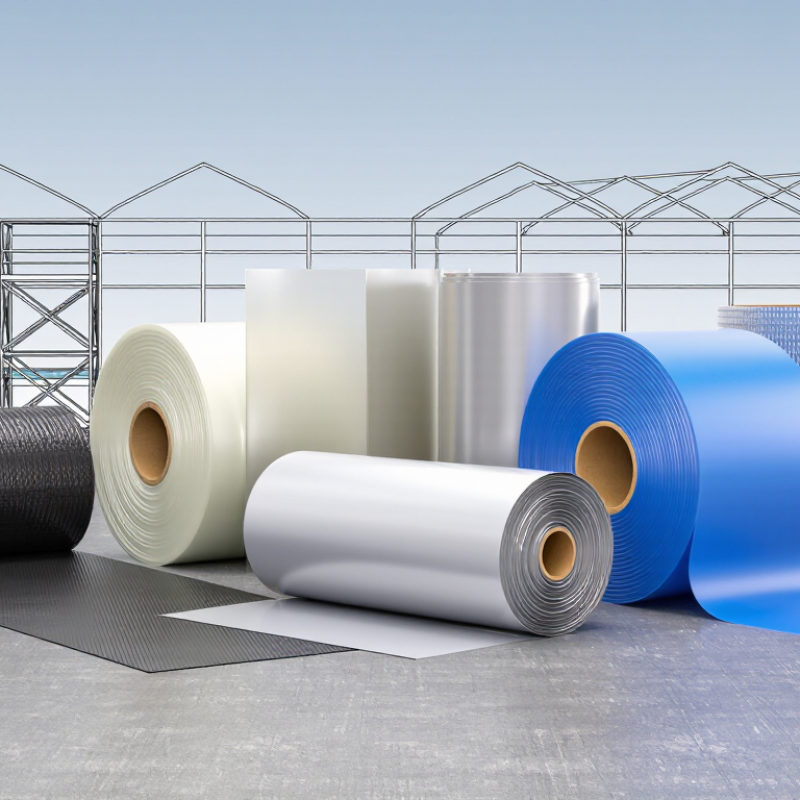
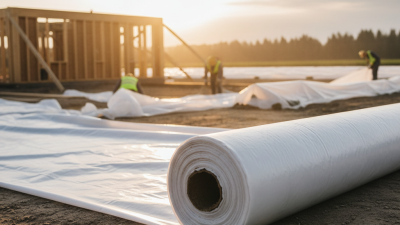
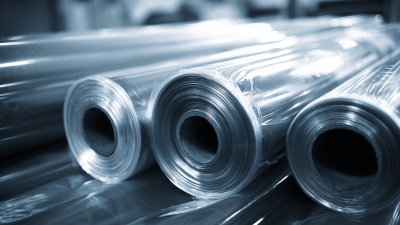
Heavy plastic sheeting is a thick, flexible plastic film used for protection, containment, covering, and temporary construction barriers. Global buyers usually assess it by thickness, material type, dimensions, color, and reinforcement. A sheet measuring 200 microns feels very different from a 400-micron sheet during folding and installation.
Its structure controls performance. Polyethylene sheeting often contains polymer layers, additives, and sometimes woven reinforcement. Multi-layer construction can improve tear resistance and stability. Woven scrim adds strength when the sheet covers sharp edges or wide outdoor areas. Smooth surfaces shed rain easily, while textured surfaces may reduce slipping during handling. These details matter.
Performance depends on the working environment. Outdoor sheets may need ultraviolet resistance, especially under strong sunlight. Low-temperature flexibility helps prevent cracking during winter transport. Tensile strength, puncture resistance, and seam quality also deserve careful testing. A thicker sheet is not automatically better. It may resist impact but create higher shipping costs and harder installation. No sheet is perfect. Even a well-specified product can fail when wind, heat, or abrasion exceeds its design conditions. Buyers should request test data, inspect sample rolls, and compare actual thickness with stated thickness. I have found that simple handling trials often reveal weaknesses that specifications miss. A sheet that folds cleanly, resists tearing, and remains stable after exposure is usually easier to trust.
| Heavy Plastic Sheeting Type | Polymer Structure | Typical Heavy-Duty Thickness | Typical Density | Core Performance Features | Recommended Uses | Main Limitations | Recycling Considerations |
|---|---|---|---|---|---|---|---|
| LDPE Sheeting | Branched polyethylene chains with relatively low crystallinity and high flexibility. | 6–20 mil (0.15–0.50 mm) |
Approximately 0.910–0.935 g/cm³ | Flexible, water-resistant, easy to fold and heat-seal, good puncture resistance for general covering work, and effective as a temporary moisture barrier. | Construction covers, floor protection, temporary enclosures, agricultural covers, packaging liners, and general-purpose weather protection. | Lower tensile strength and stiffness than HDPE; can creep under sustained loads and may degrade under long-term sunlight without UV stabilizers. | Generally identified as plastic code 4. Clean, single-material film is more suitable for film-recycling streams where available. |
| LLDPE Sheeting | Mostly linear polyethylene chains with short-chain branching, providing a balance of flexibility and strength. | 6–20 mil (0.15–0.50 mm) |
Approximately 0.915–0.940 g/cm³ | Higher tensile and tear resistance than conventional LDPE at comparable thickness, good puncture resistance, flexible handling, and reliable heat-sealing performance. | Heavy-duty liners, geomembrane-style applications, agricultural films, containment covers, construction protection, and industrial packaging. | Performance depends strongly on resin grade and additives; unprotected material can become brittle after prolonged UV exposure. | Generally identified as plastic code 4. Recycling is easier when the sheet is clean and free of fabric, metal eyelets, tape, or mixed polymers. |
| HDPE Sheeting | More linear polyethylene chains with higher crystallinity than LDPE and LLDPE. | 10–60 mil (0.25–1.50 mm) |
Approximately 0.941–0.965 g/cm³ | High tensile strength, strong chemical resistance, low moisture permeability, good dimensional stability, and strong resistance to many acids, alkalis, and salts. | Containment liners, pond and canal liners, landfill-related applications, chemical protection, heavy industrial covers, and vapor or moisture barriers. | Less flexible and more difficult to fold than LDPE; stress cracking can occur in certain environments, especially with unsuitable grades or sustained stress. | Generally identified as plastic code 2. Clean HDPE film should be separated from other plastics and reinforced materials before recycling. |
| Reinforced Woven Polyethylene Sheeting | Woven HDPE or LLDPE scrim laminated or coated between polyethylene film layers. | 8–20 mil overall (0.20–0.50 mm) |
Varies by construction and coating weight | High tear resistance, improved dimensional stability, better load distribution around fasteners, and good strength-to-weight ratio. | Truck and equipment covers, temporary buildings, scaffolding enclosures, agricultural structures, tarpaulins, and outdoor storage protection. | Cut edges may fray if not sealed; seams and coating quality determine water resistance; laminated layers can complicate recycling. | Often difficult to recycle as a mixed laminate. Recycling potential improves when the scrim and coatings are made from the same polymer family. |
| PVC-Coated Polyester Sheeting | Woven polyester fabric core coated on one or both sides with flexible polyvinyl chloride. | 16–40 mil (0.40–1.00 mm) |
Approximately 1.20–1.45 g/cm³, depending on coating and fabric weight | High tensile strength, excellent tear resistance, weldable seams, good abrasion resistance, and strong suitability for reusable outdoor covers. | Truck curtains, industrial curtains, tent structures, inflatable products, reusable tarpaulins, and long-term outdoor covers. | Heavier than polyethylene film; plasticizer migration and cold-temperature flexibility vary by formulation; PVC combustion can generate corrosive gases. | Typically a multi-material composite and more difficult to recycle than single-polymer films. Collection and specialized recycling routes may be required. |
| PVC Film Sheeting | Flexible PVC matrix containing plasticizers and stabilizers; available in clear, translucent, or opaque forms. | 10–30 mil (0.25–0.75 mm) |
Approximately 1.15–1.35 g/cm³ for flexible grades | Good transparency options, abrasion resistance, flame-retardant formulations, weldability, and resistance to water and many common chemicals. | Industrial partitions, viewing windows, cold-room curtains, protective barriers, and indoor or covered outdoor applications. | May become stiff in cold conditions; long-term outdoor performance depends on stabilizers; can be heavier than polyethylene at the same thickness. | Generally identified as plastic code 3. Recycling requires dedicated PVC collection because chlorine-containing material should not be mixed with common polyolefin films. |
| EVA Sheeting | Ethylene-vinyl acetate copolymer with adjustable vinyl acetate content for flexibility and toughness. | 10–40 mil (0.25–1.00 mm) |
Approximately 0.93–0.96 g/cm³ | Flexible at low temperatures, good impact resistance, strong moisture barrier, good clarity in suitable grades, and effective heat-sealing behavior. | Greenhouse applications, agricultural covers, cushioning layers, waterproof liners, protective packaging, and cold-environment covers. | Can have lower stiffness and load-bearing capacity than HDPE; formulation and UV stabilizer quality are important for outdoor service life. | Recycling routes vary by composition. EVA should be separated from conventional PE film unless the local recycler accepts compatible copolymers. |
| TPU Sheeting | Thermoplastic polyurethane with soft segments for flexibility and hard segments for strength and abrasion resistance. | 20–80 mil (0.50–2.00 mm) |
Approximately 1.10–1.25 g/cm³ | Very high abrasion resistance, excellent elasticity, strong tear resistance, good oil resistance in selected grades, and reliable heat-welded seams. | Reusable industrial covers, flexible ducts, medical or technical barriers, inflatable structures, and high-abrasion protective components. | Higher material cost; some grades are sensitive to hydrolysis, heat, or UV exposure; performance must be matched to the specific chemical environment. | Recycling depends on TPU chemistry and collection infrastructure. Clean mono-material scrap is the most suitable feedstock for specialized recycling. |
| Multi-Layer Barrier Sheeting | Co-extruded or laminated layers combining polymers such as PE with barrier or reinforcement layers. | 8–40 mil (0.20–1.00 mm) |
Depends on layer composition | Can combine moisture resistance, oxygen or vapor barrier performance, puncture resistance, heat-sealability, and tailored mechanical properties within one sheet. | Industrial liners, vapor-control systems, agricultural storage, specialty packaging, remediation enclosures, and controlled-environment applications. | Properties vary widely by layer design; damage to one layer can reduce total barrier performance; mixed materials may complicate repair and recycling. | Usually harder to recycle than mono-material film. Buyers should request the layer composition and end-of-life guidance before purchase. |
Note: Thickness, density, service life, UV stability, tensile strength, tear strength, and chemical resistance vary according to resin grade, additives, reinforcement, processing method, and operating conditions. Buyers should verify the supplier’s technical data sheet and applicable test standards before final selection.