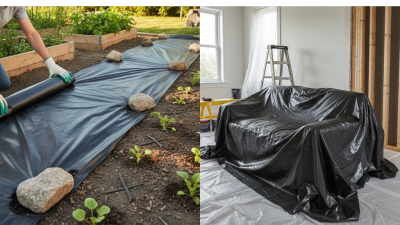
How to Choose the Right Black Plastic Sheeting?
Choosing the right black plastic sheeting requires more than comparing roll prices. It may look like a simple covering, but material quality can vary sharply. A thin sheet may work for a short indoor task, then split under sunlight or sharp gravel. The best choice depends on location, expected weather, surface conditions, and project duration.
For garden beds, landscaping, or temporary ground protection, consider thickness, tear resistance, and water resistance. For construction work, look for reinforced polyethylene, reliable seams, and suitable puncture protection. UV stabilization matters outdoors. Without it, the plastic can become brittle, fade, and crack after repeated sun exposure. Check the product’s stated thickness, width, roll length, and temperature range. Do not judge quality by thickness alone. A heavier sheet is not always the most practical option.
Practical experience shows that small details often prevent larger problems. Measure the coverage area carefully, then allow extra material for overlaps and anchoring. Smooth stones, wire edges, and strong wind can damage even durable black plastic sheeting. Use compatible tape, clips, or weighted edges rather than forcing the material into tight corners. A reputable supplier should provide clear specifications and realistic usage guidance. Independent testing information is also valuable when available. Still, product labels can be incomplete. Recheck the intended use before buying. The cheapest roll may create more waste, replacement work, and cleanup later. A careful comparison makes the final choice safer, more efficient, and easier to defend.
What Is Black Plastic Sheeting and What Are Its Main Uses?
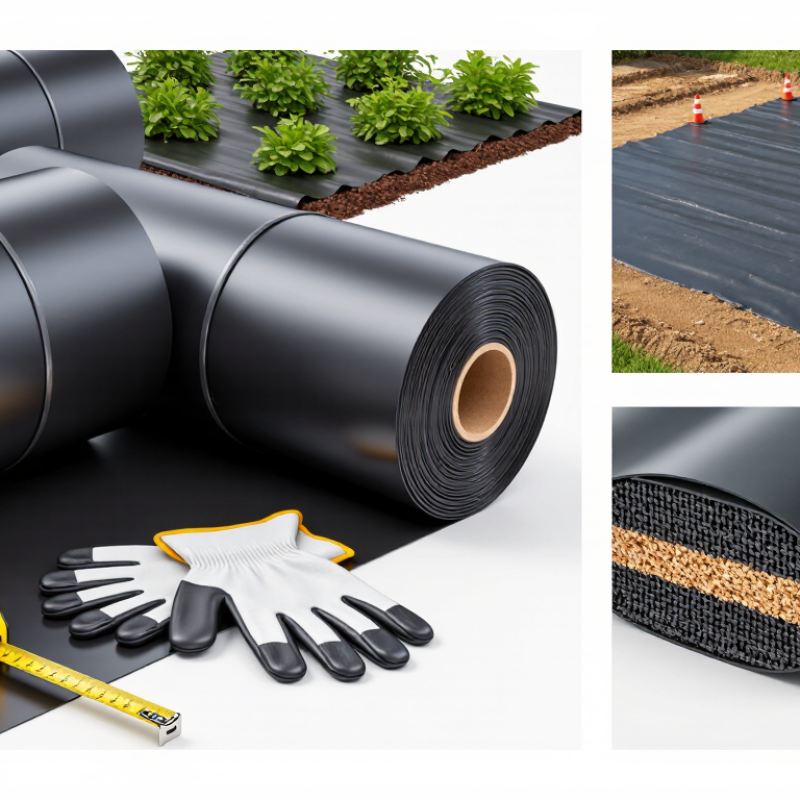
Black plastic sheeting is a flexible polyethylene film, usually produced with carbon-based pigment for opacity and ultraviolet resistance. Its dark surface blocks sunlight, helping suppress weeds and reduce light penetration. Common uses include construction vapor barriers, concrete curing covers, landscaping mulch, agricultural soil covers, temporary weather protection, and ground protection beneath stored materials.
Its performance depends on thickness, density, reinforcement, and exposure time. A thin film may suit short-term indoor covering, while heavier sheeting is more suitable for soil, masonry, or outdoor work. The construction sector is a major plastics user; PlasticsEurope’s Plastics – the Fast Facts 2023 report places building and construction at about 24% of European plastics demand. Yet disposal needs planning. The OECD’s Global Plastics Outlook reports that global plastic waste reached 353 million tonnes in 2019, nearly triple the 2000 level. A durable sheet is useful, but durability can become waste when specifications are careless.
Tips:
Check thickness in mils, not appearance alone. Confirm UV treatment for outdoor exposure. Measure the area, then allow extra material for overlaps and anchoring. Avoid punctures from sharp gravel or unfinished edges. A common mistake is choosing the darkest sheet instead of the right grade. No sheet is perfect. Review fire, moisture, temperature, and recycling requirements for the actual site.
How to Match Plastic Sheeting Thickness to Your Project
Choosing black plastic sheeting starts with thickness, not color. One mil equals 0.001 inch, or 25.4 microns. ASTM D2103-23 treats thickness as a key specification for polyethylene film and sheeting. A 2–4 mil sheet suits short-term dust control, paint protection, and light indoor covering. It tears easily around sharp edges, though.
For crawl spaces and ground vapor control, 6 mil is a common baseline. The U.S. Department of Energy’s Zero Energy Ready Home requirements reference 6-mil polyethylene for ground vapor retarders. Use 10–12 mil sheeting when covering soil, concrete, equipment, or rough construction areas. These thicker grades handle dragging better. They still need protection from nails and gravel. Thickness helps, but it does not guarantee performance.
Check the product’s tear strength, puncture resistance, UV rating, and temperature range. A 6 mil sheet with strong reinforcement may outperform a weak 10 mil sheet. For outdoor exposure lasting months, select UV-stabilized material and verify its stated service life. Black film absorbs heat. On sunny concrete, it can become surprisingly hot. I would not choose generic sheeting for ponds or long-term containment without confirmed chemical compatibility and seam data. That is where thickness alone becomes a poor shortcut.
How to Choose the Right Black Plastic Sheeting?
Matching plastic sheeting thickness to common project requirements
Thickness is measured in mils, where 1 mil equals 0.001 inch. Thinner sheeting is suitable for temporary covers and light-duty protection, while thicker sheeting offers greater resistance to tearing, punctures, and demanding outdoor or construction applications. Actual performance also depends on material quality, UV exposure, installation, and surface conditions.
Which Material Properties Matter for Strength and Durability?
Choosing black plastic sheeting starts with the material, not the color. Black polyethylene commonly contains carbon black, which can improve resistance to sunlight. However, shade and pigment quality vary. A darker sheet is not automatically stronger.
For demanding work, check thickness, tensile strength, tear resistance, and puncture resistance. Thickness helps, but it does not tell the whole story. A thin, well-made sheet may outperform a thicker sheet with weak seams. Look for clear test data, including strength across and along the sheet. These values can differ. That detail is easy to miss.
Flexibility matters in cold weather. Brittle plastic can crack when folded or pulled over rough ground. In warm conditions, excessive stretching may create thin spots. UV stability matters for outdoor storage, construction covers, and temporary barriers. Water resistance should also be checked at seams, edges, and fastening points. A sheet can be waterproof while its installation leaks.
I once judged a cover by thickness alone. It failed near a sharp corner after several windy days. The problem was poor puncture resistance, not only thin plastic. Rounded edges, protective fabric underneath, and loose fastening can reduce stress. Still, no sheet is perfect. Recycled content, additives, and manufacturing quality can change performance between batches. Ask for technical specifications and inspect a sample before buying large quantities.
How to Choose the Right Black Plastic Sheeting? - Which Material Properties Matter for Strength and Durability?
| Material or Construction |
Typical Thickness |
Typical Tensile Strength |
Typical Elongation at Break |
Puncture and Tear Resistance |
UV and Weathering Performance |
Best-Suited Applications |
| Low-Density Polyethylene (LDPE) |
0.05–0.25 mm
2–10 mil |
Approximately 8–20 MPa |
Approximately 300–700% |
Good flexibility and impact absorption; moderate resistance to sharp edges |
Limited unless UV stabilizers and carbon black are included |
Temporary ground covers, dust barriers, general-purpose covers, and moisture protection |
| Linear Low-Density Polyethylene (LLDPE) |
0.10–0.50 mm
4–20 mil |
Approximately 10–25 MPa |
Approximately 400–900% |
Very good puncture, impact, and tear resistance for its thickness |
Good when UV-stabilized; service life depends strongly on sunlight exposure and formulation |
Pond liners, containment liners, construction covers, agricultural films, and vapor barriers |
| High-Density Polyethylene (HDPE) |
0.25–2.50 mm
10–100 mil |
Approximately 20–35 MPa |
Approximately 100–800% |
High tensile and puncture resistance; less flexible than LDPE or LLDPE |
Good outdoor durability when stabilized with carbon black and suitable UV additives |
Long-term liners, waste containment, heavy-duty ground covers, and industrial barriers |
| Reinforced Polyethylene Laminate |
0.15–0.40 mm
6–16 mil |
Approximately 20–50 MPa, depending on scrim design |
Approximately 15–100% |
Very good tear propagation resistance because of the internal woven or mesh reinforcement |
Good to very good when the outer coating contains UV stabilizers |
Tarpaulins, temporary shelters, equipment covers, stockpile covers, and reusable outdoor sheets |
| Plastic Sheeting with Carbon Black |
Available across LDPE, LLDPE, and HDPE grades |
Depends on the base resin and thickness |
Depends on the base resin and processing method |
Depends primarily on resin type, thickness, and reinforcement |
Generally improved resistance to ultraviolet radiation; carbon black quality and concentration are important |
Outdoor covers, liners, agricultural applications, and long-term weather-exposed barriers |
| PVC Sheeting |
0.20–1.00 mm
8–40 mil |
Approximately 10–25 MPa for flexible grades |
Approximately 150–400% |
Good abrasion resistance; performance varies with plasticizer content and temperature |
Often good outdoors when formulated for weathering, but plasticizer migration and cold brittleness should be considered |
Flexible curtains, industrial partitions, floor protection, and applications requiring strong abrasion resistance |
Material Properties That Matter Most
| Property |
Why It Matters |
What to Look For |
| Thickness |
Greater thickness generally improves puncture resistance, service life, and barrier performance. |
Select thickness according to contact with sharp objects, wind exposure, handling frequency, and expected service duration. |
| Tensile Strength |
Indicates the force required to stretch and break the sheet. |
Use higher tensile strength where the sheet will be pulled, secured, or exposed to wind loads. |
| Elongation at Break |
Shows how much the material can stretch before breaking. |
High elongation is useful for irregular surfaces and impact absorption; lower elongation may provide better dimensional stability. |
| Puncture Resistance |
Measures resistance to localized penetration from stones, tools, edges, or equipment. |
Choose a thicker LLDPE or HDPE sheet, or use reinforcement, for demanding ground-contact applications. |
| Tear Propagation Resistance |
Determines whether a small cut will rapidly spread through the sheet. |
Look for reinforced construction, balanced film orientation, and documented tear-test results. |
| UV Stability |
Ultraviolet exposure can cause polymer embrittlement, cracking, and loss of strength. |
For outdoor use, select a UV-stabilized grade and confirm the expected exposure period or accelerated-weathering data. |
| Temperature Resistance |
Cold can reduce flexibility, while heat can soften or deform the sheet. |
Verify the manufacturer’s continuous-use temperature range for the actual environment. |
| Chemical Resistance |
Liquids, oils, solvents, and agricultural chemicals may soften, swell, or degrade some plastics. |
Check compatibility with the specific chemical, concentration, temperature, and contact time. |
| Water Vapor Transmission |
Controls how readily moisture vapor passes through the sheet. |
For vapor barriers and containment, compare tested water-vapor transmission values rather than thickness alone. |
| Seam and Attachment Strength |
The sheet may fail at heat-sealed seams, grommets, folds, or fasteners before the film itself fails. |
Use compatible joining methods and reinforced edges where loads are concentrated. |
Note: The numerical values shown are typical indicative ranges for common plastic formulations and are not guaranteed specifications. Actual performance varies with resin grade, additives, manufacturing process, thickness, temperature, testing method, and exposure conditions. Always compare test data from the intended product grade before making a final selection.