China has become a major source of polypropylene plastic sheets for packaging, construction, chemical processing, and industrial fabrication. Many manufacturers offer standard panels, custom sizes, textured surfaces, and different grades for demanding environments. However, product quality can vary widely between suppliers.
This guide introduces ten notable Chinese suppliers and explains what buyers should examine before requesting quotations. The review considers manufacturing experience, material consistency, sheet thickness, dimensional tolerance, surface finish, color stability, and customization capability. It also looks at practical evidence, including production equipment, quality-control procedures, export experience, and customer support. A reliable supplier should provide clear technical data, sample availability, and traceable test results. Certifications may help, but they should not replace independent verification.
A ranking is never permanent. Market conditions change. Some suppliers excel at high-volume orders, while others perform better with prototypes or unusual dimensions. Buyers should compare polypropylene plastic sheets by application rather than price alone. For example, a chemical tank lining may require different performance from a packaging divider or fabricated machine guard. Requesting samples can reveal warping, uneven edges, surface marks, or inconsistent thickness before a large purchase. These details are easy to overlook. They often affect cutting accuracy and long-term service life. The following overview offers a practical starting point, while encouraging readers to confirm current certifications, factory capabilities, lead times, and commercial terms directly with each supplier.
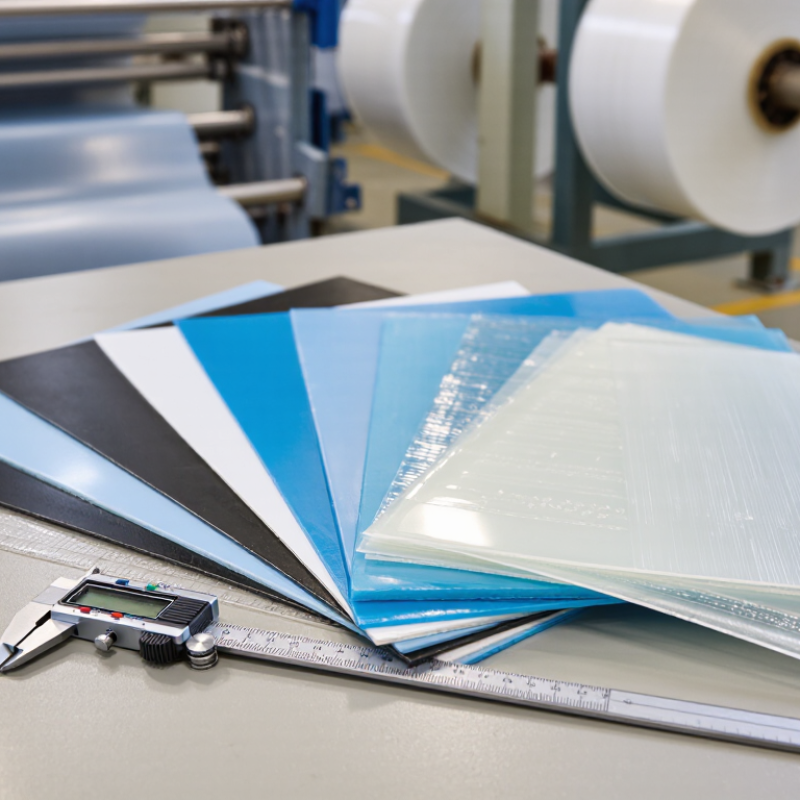
A reliable China supplier shortlist should begin with material data, not marketing language. For this PP sheet market, target a density of 0.90–0.91 g/cm³. This range usually indicates lightweight polypropylene with consistent processing quality. Ask suppliers for batch test reports, thickness tolerances, and resin information. A practical review should also examine service conditions between 100°C and 160°C. These temperatures may suit different applications, but exposure time matters. Continuous heat can reduce stiffness faster than short-term contact.
Look closely at sheet dimensions and surface finish. A good supplier should explain extrusion settings, flatness controls, and inspection frequency. Request samples with the same thickness, color, and reinforcement as the planned order. Test them under real heat, load, and cleaning conditions. Laboratory figures alone can mislead. That is worth remembering.
Tips: Confirm whether the quoted temperature is continuous or intermittent. Check dimensional change after heating. Measure density from the delivered batch, not only from a catalogue. Also review packaging, moisture protection, and traceability records. A supplier that answers technical questions clearly is often easier to manage. Still, no shortlist is perfect; independent testing remains necessary before large-scale purchasing.
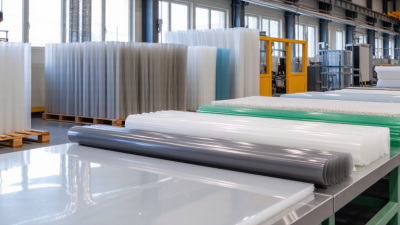
Ranking China’s top ten PP sheet suppliers requires more than factory claims. S&P Global Commodity Insights reported China’s polypropylene capacity at over 40 million tonnes annually in 2024. However, resin capacity is not sheet capacity. A reliable ranking must separate extrusion lines, annual sheet output, and usable production capacity.
The strongest suppliers should show audited output above 10,000 tonnes yearly, stable thickness control, and export experience. China Customs data under HS 392020 can help verify overseas shipments, although this code also includes other plastic film and sheets.
ISO 9001 supports process control, while ISO 14001 indicates environmental management. RoHS and REACH documentation adds value for regulated applications. These certifications still need checking.
A practical ranking model can assign:
45% to verified PP sheet capacity
25% to export records
20% to certifications
The remaining 10% should cover delivery performance and complaint handling. Public databases often mix trading companies with manufacturers. That weakness deserves attention.
Factory audits should confirm extruder count, warehouse stock, laboratory equipment, and batch traceability. Look for caliper gauges beside the production line, not only certificates on a website. Industry reports provide useful direction, but supplier-level evidence remains uneven.
China’s top polypropylene sheet suppliers differ more in process control than in catalog size. Most offer homopolymer PP for stiffness, copolymer PP for improved impact resistance, and UV-stabilized grades for outdoor use. Some provide flame-retardant or food-contact options, but certificates should be checked for the exact grade.
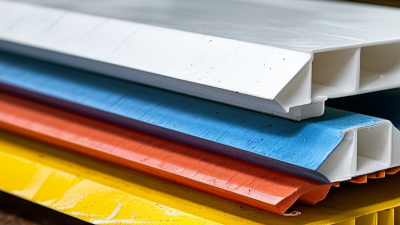
Sheet thickness commonly ranges from 0.5 to 40 millimeters. Thin sheets suit packaging, lining, and fabrication work. Thicker boards support tanks, partitions, and machine guards. Available widths often reach 1,500 to 2,000 millimeters, while custom widths may require a minimum order. Ask for actual tolerance data, not only nominal measurements.
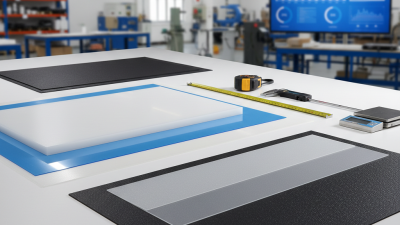
Surface finish changes handling and appearance. Smooth sheets are easy to clean and weld. Embossed finishes can reduce glare and hide light scratches. Matte, hair-cell, and corona-treated surfaces serve different fabrication needs. During supplier reviews, request samples with measured thickness, width, flatness, and color consistency. A caliper check at several points can reveal uneven extrusion. It is a small test, but useful. Supplier websites may omit warpage limits or batch variation, so written confirmation remains important. Even experienced buyers sometimes overlook this detail.
This chart presents commonly available PP sheet thicknesses in the global industrial plastics market. Typical sheet widths include 1,000 mm, 1,220 mm, 1,500 mm, and 2,000 mm. Standard surface options include smooth, matte, embossed, and textured finishes. PP sheet density is commonly around 0.90–0.91 g/cm³, with a typical melting range of approximately 160–165°C.
When evaluating China’s polypropylene sheet suppliers, quality should start with measurable evidence, not catalogue language. PlasticsEurope’s Plastics – the Facts 2023 reports 400.3 million tonnes of global plastics production in 2022. That scale increases the need for controlled material selection. ISO 1873 defines polypropylene material requirements, while ASTM D4101 provides a classification framework for polypropylene molding and extrusion grades. A supplier should show the exact grade, lot number, and test method used.
Melt flow rate helps reveal processing consistency. ISO 1133-1 or ASTM D1238 results can indicate whether sheets may vary during extrusion. However, a higher MFR is not automatically better. Impact performance, often checked with ASTM D256, matters for sheets used near machinery or during transport. Tensile strength and elongation, commonly tested under ASTM D638, show how the sheet behaves when pulled. Ask for original laboratory reports, sample conditioning details, and machine direction results. Many reports omit direction. That is a weakness.
Tips: Compare three production lots, not one sample. Check MFR, impact, tensile strength, elongation, thickness tolerance, and surface defects together. A useful supplier should explain unusual results without changing the test method. In practice, I would also inspect a cut edge under bright light. Voids, streaks, or uneven filler dispersion can expose problems that numbers miss. ISO and ASTM compliance supports trust, but it does not replace hands-on verification.
Supplier-neutral technical comparison framework for polypropylene sheet qualification
| Rank | Anonymous Supplier Profile | ISO 1873 Reference | ASTM D4101 Application Basis | MFR (g/10 min) |
Notched Izod Impact (J/m) |
Tensile Yield (MPa) |
Tensile Elongation (%) |
Recommended Verification Evidence |
|---|---|---|---|---|---|---|---|---|
| 1 | Profile A — General-purpose homopolymer sheet | PP-H; molding/extrusion designation to ISO 1873-1 | Extrusion-grade PP material specification review | 0.8–1.5 | 25–45 | 30–38 | 8–15 | MFR report, lot traceability, tensile test report |
| 2 | Profile B — High-stiffness homopolymer sheet | PP-H; ISO 1873 designation and grade documentation | Injection/extrusion material classification | 0.5–1.0 | 20–35 | 34–42 | 6–12 | Flexural data, thickness map, dimensional inspection record |
| 3 | Profile C — Impact-modified copolymer sheet | PP-B or PP-R designation where applicable | Copolymer material suitability for extruded sheet | 0.5–1.2 | 45–90 | 25–34 | 10–25 | Low-temperature impact data and batch impact results |
| 4 | Profile D — Random copolymer transparent sheet | PP-R designation and comonomer disclosure | Extrusion-grade copolymer evaluation | 1.0–2.5 | 35–70 | 24–32 | 12–30 | Haze, gloss, optical inspection, and MFR consistency data |
| 5 | Profile E — Mineral-filled rigid sheet | PP compound designation with filler information | Filled PP specification and composition control | 0.7–2.0 | 15–35 | 28–45 | 3–10 | Ash content, filler dispersion, density, and warpage results |
| 6 | Profile F — UV-stabilized outdoor sheet | PP designation plus additive specification | PP sheet suitability with weathering requirements | 0.6–1.8 | 25–60 | 28–38 | 8–20 | UV exposure report, color-change record, additive declaration |
| 7 | Profile G — Food-contact candidate sheet | PP grade designation with regulatory documentation | Material specification plus applicable food-contact compliance | 1.0–3.0 | 30–65 | 24–35 | 10–25 | Declaration of compliance, migration testing, traceability records |
| 8 | Profile H — Recycled-content sheet | PP designation with recycled-content identification | Recycled PP composition and performance control | 0.5–2.5 | 15–50 | 22–34 | 5–18 | Recycled-content percentage, contamination screening, lot testing |
| 9 | Profile I — Flame-retardant technical sheet | PP compound designation and flame-retardant disclosure | Modified PP specification with fire-performance review | 0.3–1.5 | 10–30 | 25–40 | 3–12 | Flammability report, additive declaration, smoke and color assessment |
| 10 | Profile J — Low-MFR heavy-duty sheet | PP-H or PP-B designation with extrusion-grade identification | Heavy-section extrusion material evaluation | 0.2–0.8 | 30–75 | 30–40 | 8–18 | MFR stability, weld-line impact, thickness profile, and tensile testing |
When comparing China’s top polypropylene sheet suppliers, separate resin cost from conversion cost. ICIS polypropylene market assessments show that resin prices can shift with crude oil, plant outages, and regional supply balances. Request a dated quotation with thickness, width, surface finish, color, packaging, and delivery terms. A low unit price may hide higher trimming waste or export charges.
MOQ should match your production risk. Some factories accept trial orders near one pallet, while custom colors, embossing, or cut sizes require larger batches. Ask for a pilot lot before signing an annual contract. Lead times should include production, inspection, port handling, and ocean transit. In practice, a quoted 15-day lead time may not include vessel delays. Build a buffer.
Compliance needs written evidence, not confident emails. PlasticsEurope’s Plastics—The Fast Facts 2024 reported global plastics production of 413.8 million tonnes in 2023, showing the scale of this supply chain. That scale also increases traceability pressure. For technical or food-contact applications, request material declarations, batch records, and relevant test reports. Check EU food-contact Regulation 10/2011, REACH obligations, or FDA 21 CFR 177.1520, depending on the destination. OECD’s Global Plastics Outlook also highlights growing waste-management pressure. Recycled content claims therefore need clear calculation methods and supporting records. I would not accept a certificate without checking its scope, validity, and tested material grade. A spreadsheet can still lie.